In 1999, the mighty US Army was directed to rapidly deploy Apache helicopters to Albania. Fearing this may provoke Yugoslavia to strike across the border with armored units, Army Generals insisted on a robust security force with heavy firepower. However, the Army discovered that it had no way to rapidly deploy small armored units. It could load and dispatch units by ship from Georgia or Germany, but this would take a few weeks. It could bring up the armor brigade of equipment loaded on ships in the Indian Ocean and fly in troops from Texas, but Albanian seaports were too shallow for these huge ships.
The Army decided to fly tank and support units from Germany. However, American transports were already busy supporting the air war against Yugoslavia and moving the Apache battalions. As a result, it took a month to move a company-size armored task force to Albania just to provide security. Despite this lesson, the US military took no steps to establish a rapidly deployable armored force. Fortunately, the US military already has the ideal platform, the Landing Ship Tank (LST), which can carry up to 29 tanks and 350 troops.
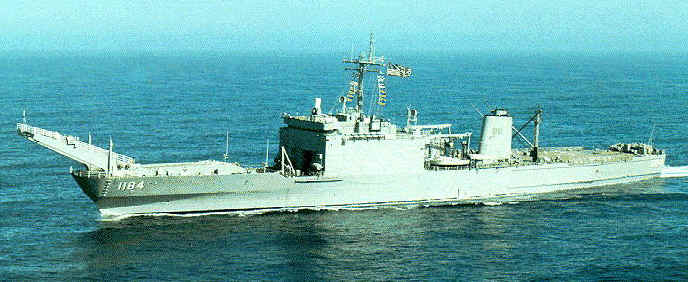
At the end of the Cold war, the US Navy had 27 Newport class LSTs in service. They were relatively new, but smaller than other amphibious ships. Unfortunately, the US Navy decommissioned most smaller ships to exaggerate the overall reduction in US Navy ships since the Navy's math used to announce fleet size counts LSTs, frigates, and patrol boats the same as an aircraft carrier. The Marines pleaded to keep some LSTs since they have a unique ability to land vehicles directly on a beach, which makes them the ideal platform to rapidly deploy tanks ashore.
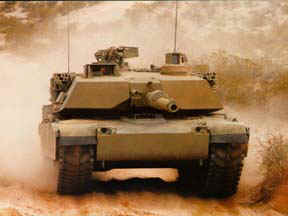
If the US Navy based combat-loaded LSTs overseas, the US Marine Corps or Army could instantly deploy armored battalions. Unfortunately, only four LSTs remain in the inactive reserve fleet as wartime assets, and other LSTs are waiting to be sold. The US military should recommission two LSTs, overhaul them for another 30 years of service, and combat load them for rapid deployment. Each LST could carry a tank company with 14 tanks, plus some armored vehicles for infantry support, and tank retrievers, refuelers, trucks, and mine rollers/plows. With room for only 350 soldiers, there will be little room for infantry. However, infantry are easy to deploy by air, and the LST can carry a supply cache to support them too.
Composite Army or Marine armored battalions could rotate aboard ship every six months after six months of intense training stateside. The LST could deploy for a short "shakedown" cruise so the new team can practice one landing. The remaining time would be spent in port, except for participation in local exercises. These LSTs could get underway within 72 hours and offload combat ready vehicles directly on any beach or port within a few days. LSTs can remain to provide fresh water, hot food, fuel, a medical facility, worldwide communications, and a helicopter landing pad. If the situation changes for the worse, the LST can extract the armored task force.
 LSTs can make surprise landings at
night until the roar of tank engines coming down the beach alarms
the locals. A single LST is not going to land on a defended
beach, but it can double the firepower of 2000-man a forward deployed Marine
expeditionary unit. Of course mines can threaten ships, but
there are no sea mines in place in the world today. Rapid deployment is
usually to help friendly countries anyway. Deployed carrier strike
groups can protect LSTs from air and naval threats.
LSTs can make surprise landings at
night until the roar of tank engines coming down the beach alarms
the locals. A single LST is not going to land on a defended
beach, but it can double the firepower of 2000-man a forward deployed Marine
expeditionary unit. Of course mines can threaten ships, but
there are no sea mines in place in the world today. Rapid deployment is
usually to help friendly countries anyway. Deployed carrier strike
groups can protect LSTs from air and naval threats.
This should be a mission for the US Marine Corps, but the Marines are too busy "occupying" Okinawa. However, the US Army has ample forces with no means of rapid deployment and should demand ownership of the LSTs and train soldiers to operate them. The Army already operates several large LCU landing craft. The US Congress will rightly complain about roles and missions, so the Army can then offer to provide annual funding for 750 LST sailor crewmen, and offer to pay the operating costs for the ships, which is no more than the cost of operating an immobile US Army base in Germany. If this relatively low-cost idea is adopted, the Army's true rapid deployment force will become the LST-based armored battalions.
Meanwhile, the US Marine Corps must press for new LSTs as essential for future amphibious warfare. These can be simple designs but should have a CIWS radar-guided anti-missile 20mm gatling gun on the bow and at least two 7.62mm gatling guns forward as a last minute defense against incoming missiles. Parking spaces on deck for two heavy tanks would be great! Tied down tanks could fire their stabilized main gun and machine guns as the ship approaches shore. Finally, a shield on the bow in the form of "cage" armor would be nice, perhaps a chain mail curtain. This would be a movable steel fence that can be dropped from the deck and hangs from the bow to provide a barrier some ten feet from the hull that would cause incoming missiles to explode prematurely.
©2015 www.G2mil.com